
Restaurant marketing
How to Add Your Restaurant Menu to Google Business Profile
Add a restaurant menu to Google Business Profile with a stable mobile menu URL, accurate menu items, and a simple update routine.
aiMenuu Editorial Team · October 1, 2026 · 9 min read
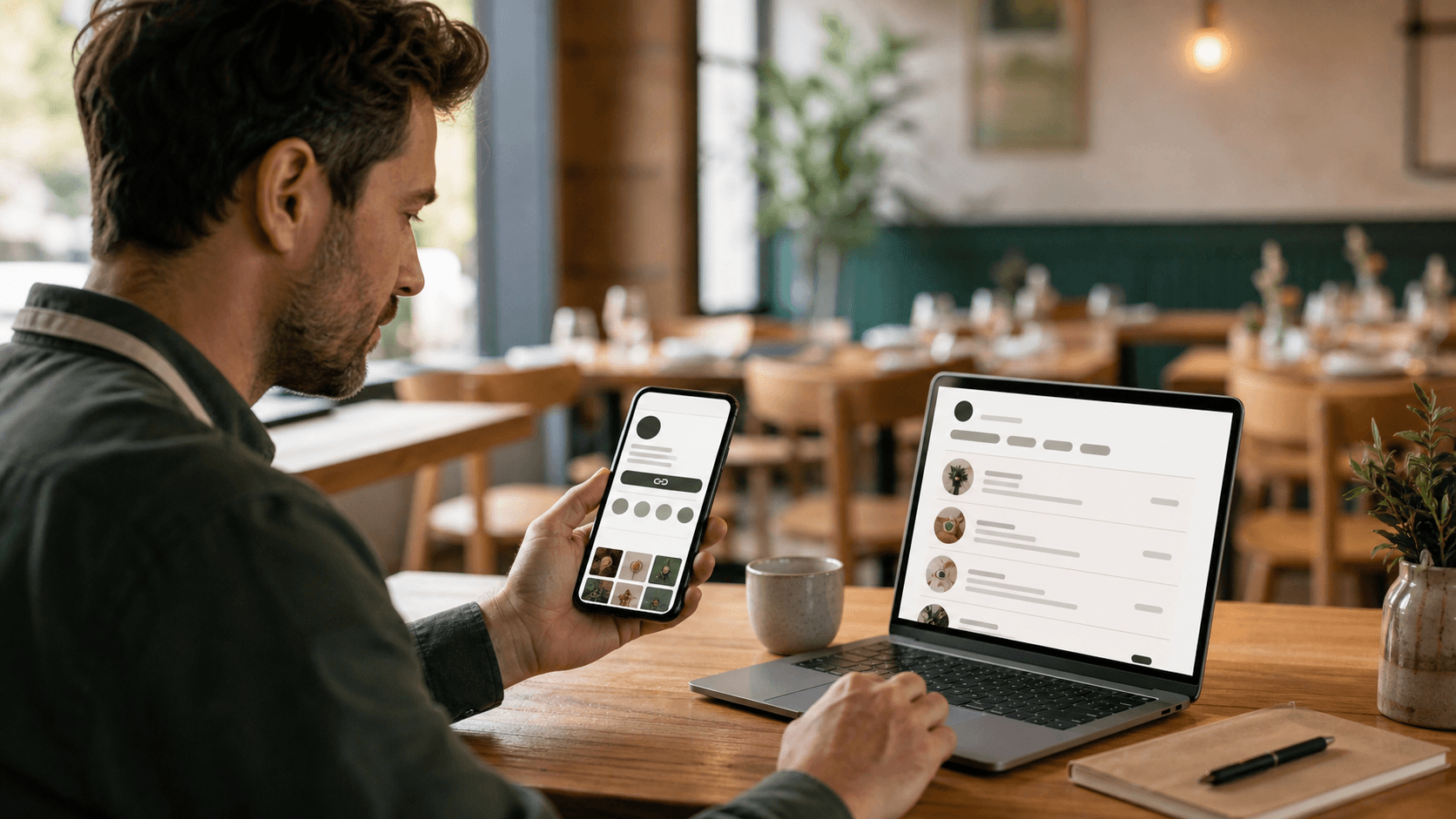
To add your restaurant menu to Google Business Profile, first publish one accurate mobile menu at a stable public URL. Then open your Business Profile, choose Edit profile, Business information, Contact, and Menu link, paste that direct menu URL, and save. Eligible food and drink businesses can also use Google's menu editor to list sections, dishes, descriptions, and prices directly on Search and Maps.
Understand the three menu surfaces Google can show
Google Business Profile can surface restaurant menu information in several ways. The simplest is a menu link: a URL you provide that sends the guest to a menu hosted on your website or another public page. Eligible food and drink businesses may also use Google's menu editor to create structured sections and items inside the profile. Google additionally allows owners to upload menu photos or a PDF.
These are related surfaces, but they are not the same thing. For most independent restaurants, start by deciding which source you can keep accurate. Google's current menu editor documentation says food and drink businesses can add sections, items, descriptions, and prices, and that menu-editor changes can take 24–48 hours to display.
Publish one stable mobile menu first
Do not start inside Google if the restaurant still has three conflicting menu files. Choose the current approved source first. If the source is a PDF, follow the PDF-to-mobile menu workflow and check every category, item, description, and price. If the source is a photograph, use the menu-photo conversion guide and review the extracted draft line by line.
An AI menu maker can shorten the path from an existing PDF or photo to an editable mobile menu, but the important output is the stable public page, not the extraction itself. In aiMenuu, the practical flow is import, review, correct, choose a mobile layout, publish, then use that public URL wherever guests need the menu.
Add the menu URL to Google Business Profile
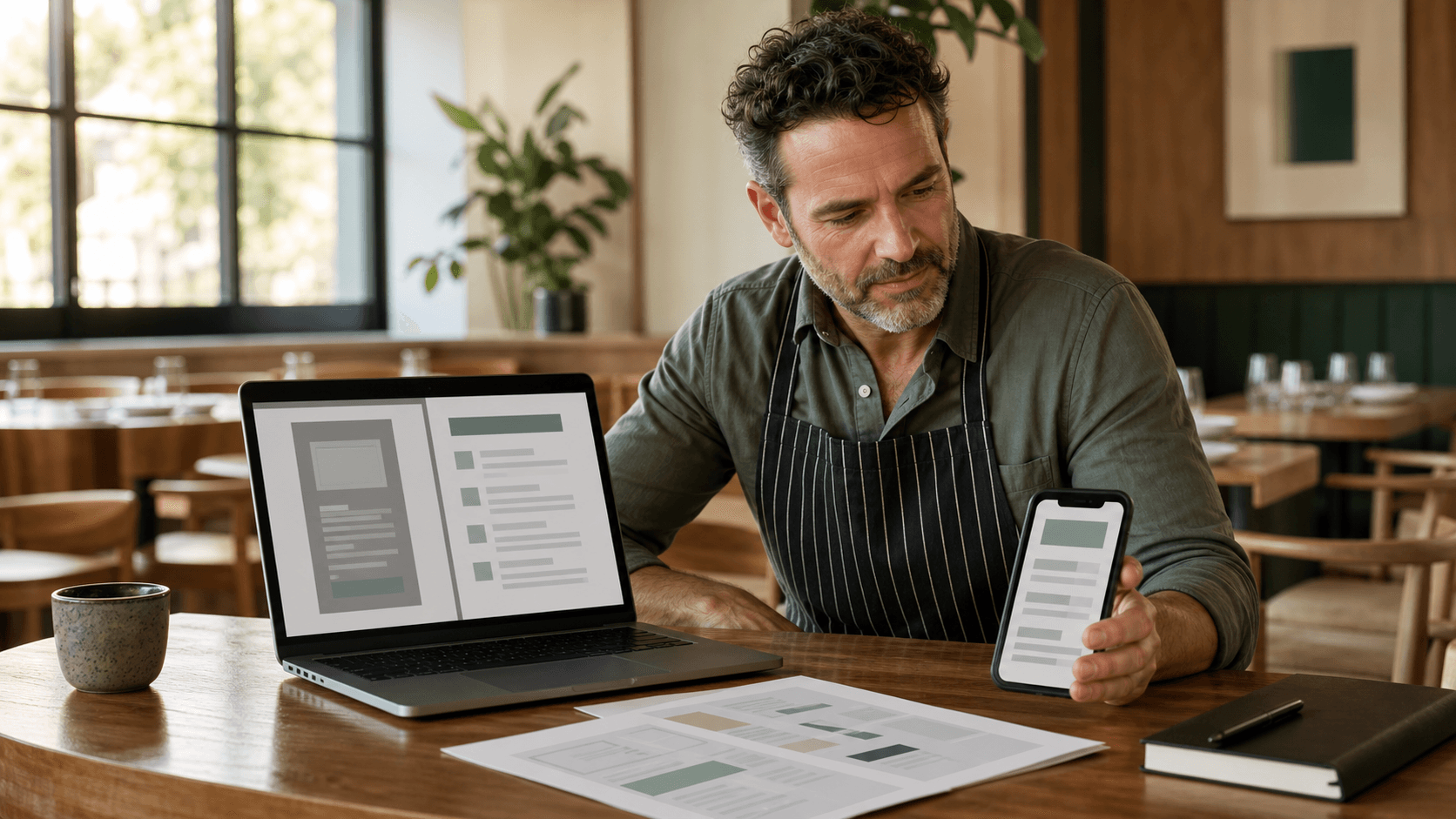
Google's current instructions are straightforward: go to your Business Profile, select Edit profile, then Business information, Contact, and Menu link. On desktop Google Search, the shorter path may appear as Edit profile, Contact, Menu link. Paste the URL where your menu can be found and save it.
Use the direct public menu page, not the restaurant homepage unless the homepage is genuinely the menu. A guest who taps Menu has already expressed a specific intent; adding another navigation step makes that task harder. The destination should open without a login, editor session, app installation, or file download. Test it over mobile data as well as Wi-Fi.
What should the menu URL look like?
A good menu URL is stable, public, HTTPS, mobile-readable, and controlled by the restaurant. It should identify the restaurant clearly and show the current menu without forcing the guest to hunt for it. If routine edits can happen without changing the URL, the same link can keep working across Google, table QR codes, printed cards, and social profiles.
Decide whether to maintain Google's menu editor too
The Google menu editor can list sections such as appetizers, mains, desserts, and beverages, with individual names, descriptions, and prices. This can be valuable because the information appears inside the Business Profile rather than only behind an external link. Google also notes that some businesses may be able to copy and update menu data from an existing menu source.
The tradeoff is operational. If a price changes in your restaurant's live menu, the copy entered directly into Google may also need updating. Assign responsibility for that task. A small restaurant with frequent seasonal changes may prefer to keep the direct menu link as the primary maintained source and reserve Google's structured menu for the most important, stable items.
Use a direct mobile page instead of an outdated PDF link
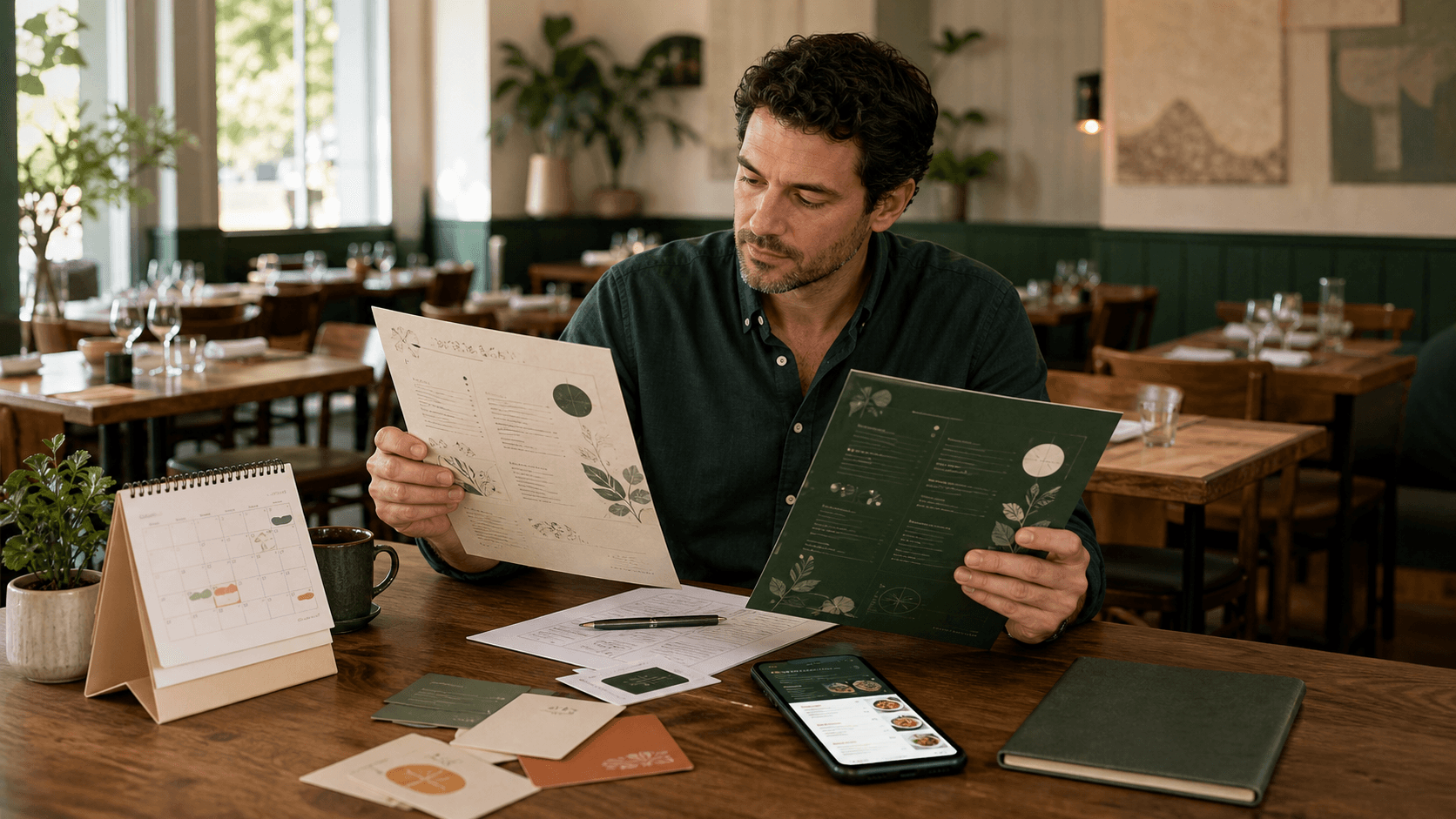
Google allows owners to upload menu photos or a PDF, and a PDF can still be useful for printing or email. But when you control the external Menu link, a responsive page is usually the cleaner guest experience. Phone users can read real text without pinching across a print-sized page, category navigation can work properly, and the restaurant can update individual dishes without exporting a new file.
If your current menu only exists as a PDF, keep that file as the approved source while you build the web version. Separate transcription from publication: extract the content, review it, publish the structured page, then point Google at the stable URL. That gives the restaurant one maintained guest destination without pretending the original PDF no longer has operational value.
Verify the Google-to-menu path before you announce it
After saving the menu link, do not assume the job is complete because the dashboard accepted it. Search for the restaurant while signed out, open the Business Profile on a phone, and test the Menu destination that a guest can actually see. Google interfaces and review timing can vary, so verify the public result rather than relying only on the owner view.
On the menu page, check the restaurant name, category order, long dish names, prices, dietary notes, and any images that could be mistaken for a different dish. Then test the same stable URL from a table QR code if you use one. The guide to updating a QR menu without reprinting explains why a durable destination matters once printed codes are already in circulation.
Reuse the same menu destination across guest channels
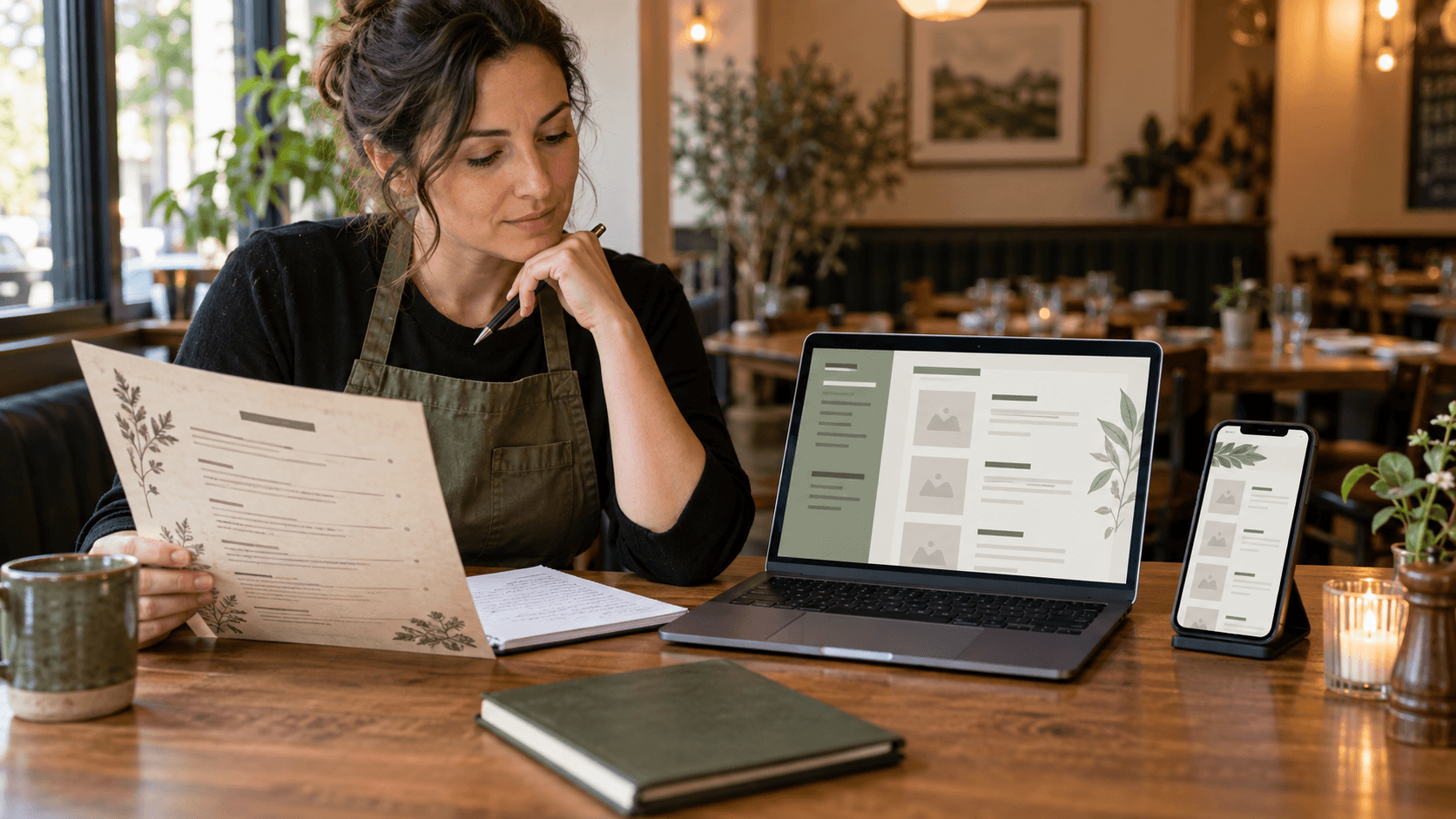
A restaurant does not need a different menu destination for every marketing channel. One stable public menu can be linked from Google Business Profile, the restaurant website, table QR codes, email, and social profiles. That reduces the chance that an old PDF survives on one channel after the main menu changes.
Keep the channel-specific wording clear. On Google, the Menu action should go straight to the menu. On Instagram, a label such as View Menu is easier to understand than a bare URL; the Instagram menu-link guide shows the profile-to-menu path. The destination can be the same even though the entry point changes.
Troubleshoot missing or conflicting menu information
If the menu editor does not appear, first confirm that the Business Profile is categorized as an eligible food or drink business. Google's documentation also notes that profiles receiving a menu through the Business Profile API may not have the same menu-editor feature in Business Profile or Google Search. Do not change a business category merely to unlock a feature unless the category accurately describes the business.
If Google finds multiple menu sources, the Menu area may let you choose a preferred menu. Select the source that is current and under the restaurant's control, then save. If third-party data remains wrong, correct it at the provider when possible and use Google support for unresolved profile issues. Most importantly, keep the restaurant's own live menu accurate so there is always one dependable source to compare against.
Frequently asked questions
Can I add my restaurant menu URL to Google Business Profile?
Yes. Google Business Profile Help says eligible businesses can add or edit a Menu link from Edit profile, Business information, Contact, Menu link, then enter the URL where the menu can be found and save.
Should the Google menu link point to my homepage or directly to the menu?
Point it directly to the public menu whenever possible. A guest who selects Menu should not have to navigate through a generic homepage before reaching dishes and prices.
Does aiMenuu automatically sync my menu to Google Business Profile?
No direct Google sync is claimed. aiMenuu can help turn a PDF, photo, or text source into an editable mobile menu and publish it. You then copy the public menu URL into Google Business Profile.
Can I use the same menu URL for Google, Instagram, and a QR code?
Yes, if it is a stable public URL that remains valid when menu content changes. Reusing one maintained destination reduces the risk of old menus surviving on separate channels.
How long do Google menu editor changes take to appear?
Google currently says menu-editor changes can take 24–48 hours to display on Google Maps and Search. Always verify the public profile after making important updates.