
Menu writing
Restaurant Menu Item Names: Clear, Searchable and Easy to Order
Name restaurant dishes clearly without losing personality, using a practical system for guest understanding, staff consistency and mobile menus.
aiMenuu Editorial Team · November 21, 2026 · 8 min read

A strong restaurant menu item name tells a guest what the dish is before it asks them to appreciate the story behind it. Start with the familiar food, preparation, or defining ingredient, then add the house character. An AI menu maker can help turn an approved printed menu or PDF into editable mobile content, but the restaurant still needs to decide which names guests, servers, and kitchen teams can use consistently. The goal is not to make every name plain or generic. It is to remove avoidable guesswork while preserving the language, culture, and personality that make the menu distinctive.
Quick answer: name the dish before naming the story
The clearest pattern is familiar dish plus defining detail. “Smoked Mushroom Ramen” gives the guest a category and a reason it is different. “Midnight Forest” may be memorable, but it makes the guest search for an explanation before knowing whether the item is soup, noodles, or dessert. If a signature title matters to the brand, combine them: “Midnight Forest — Smoked Mushroom Ramen.”
A useful item name should survive three moments. A guest should understand it while scanning, a server should be able to repeat it without translating the entire description, and the kitchen should know which item the words refer to. When the same name works in all three moments, ordering becomes calmer and menu updates are easier to review.
Do not force every ingredient into the title. The name identifies the dish; the description explains preparation, accompaniments, texture, and important details. Keeping those jobs separate prevents a mobile menu from turning into a wall of long headings.
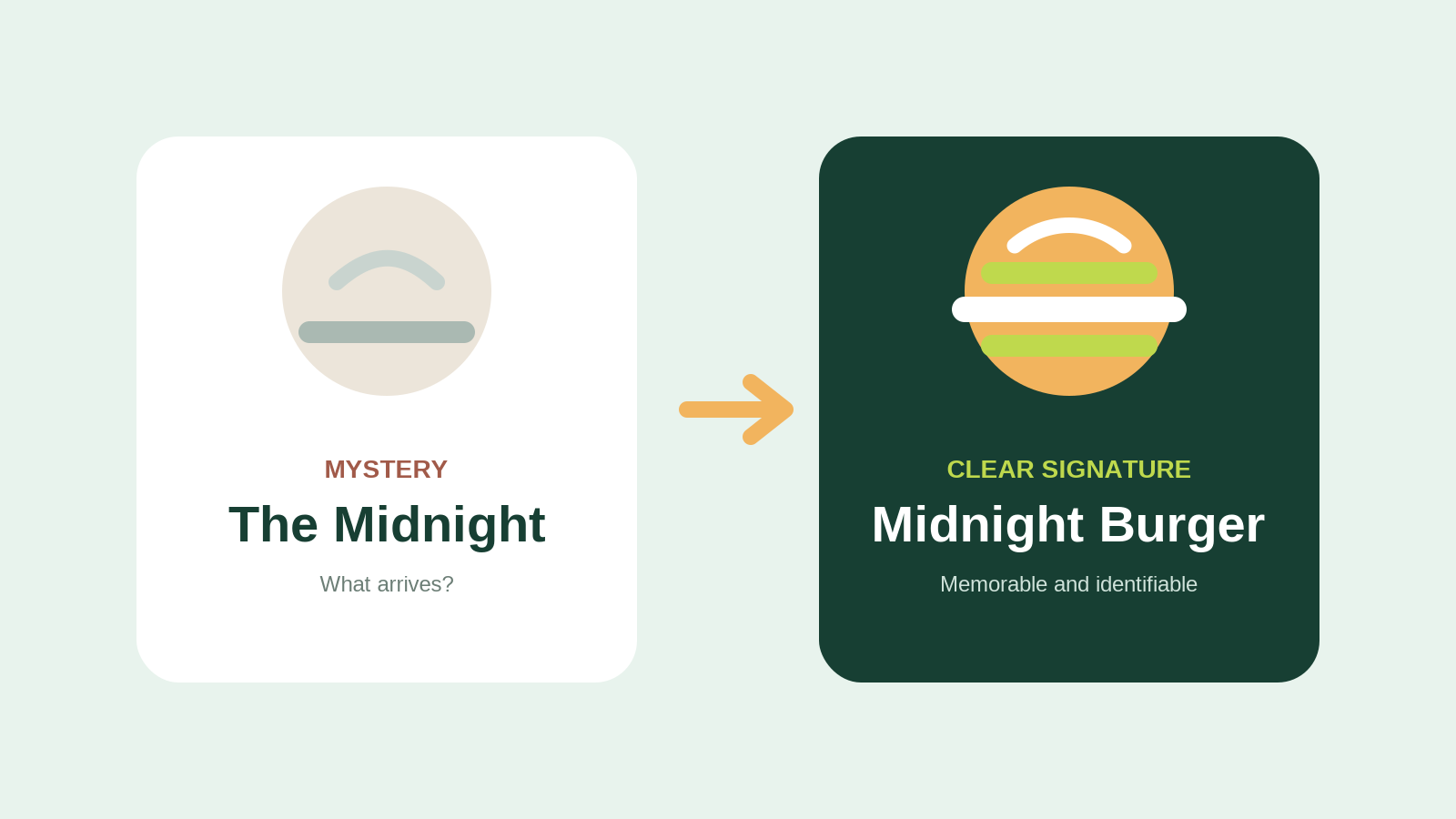
Build each item name from four possible parts
Most names need only one or two parts: the common dish or drink, followed by the most useful distinction. That distinction might be the main ingredient, cooking method, regional style, sauce, or service format. “Grilled Miso Salmon,” “Sichuan Dry-Fried Green Beans,” and “Cold Brew with Orange Cream” tell guests what they are comparing without reading a paragraph first.
A place, person, or house label can add character when the food remains identifiable. “Juniper House Burger” works because burger carries the category. “Grandma Lina’s” does not tell a first-time guest whether the item is pasta, cake, or a sandwich. Add the object: “Grandma Lina’s Lemon Cake.” The story can continue in the description.
Use size, quantity, or service period in the name only when it changes the choice. “Six Oysters,” “Lunch Bento,” and “Half Roast Chicken” are decision-making facts. Internal production codes, supplier terms, and abbreviations belong elsewhere unless guests already understand them.
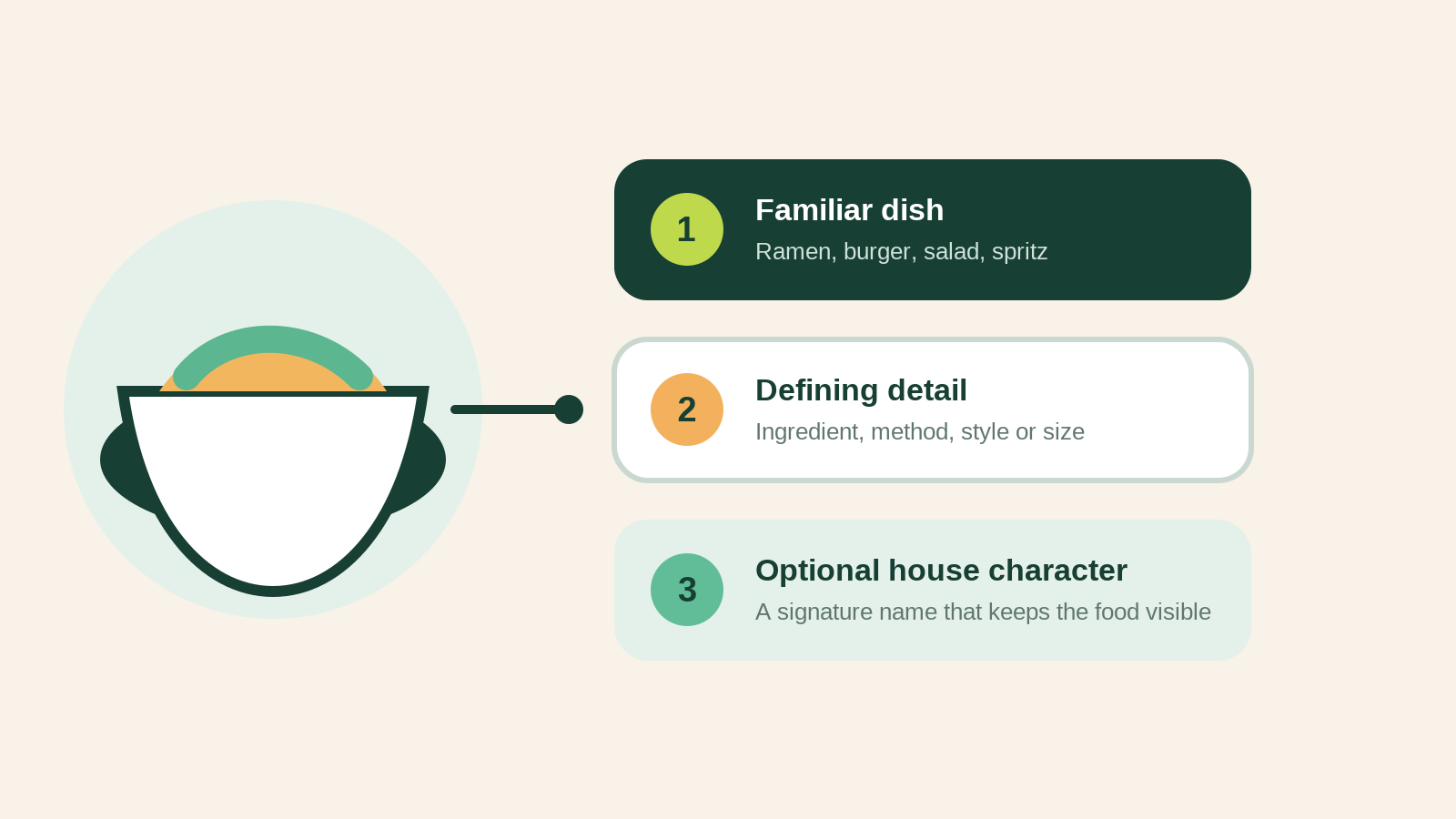
Keep cultural meaning while reducing guesswork
Traditional names carry history and identity, so clarity should not mean replacing them with generic English. Keep the authentic name and add a short, respectful explanation when many guests may not know the term. “Okonomiyaki — Savory Cabbage Pancake” or “Khao Soi — Northern Thai Curry Noodles” lets the original name lead while giving a first-time diner a useful frame.
Avoid claiming a region, technique, or protected style unless the kitchen can support it. A geographic word should help guests understand the food, not operate as decoration. Check spelling, diacritics, capitalization, and transliteration with someone who knows the language or with an approved reference used by the restaurant.
For multilingual menus, decide whether each language receives its own natural name or a translated explanation beneath one primary name. Do not squeeze several languages into one oversized heading. Preserve the relationship between the item and its explanation, and review line breaks on the smallest supported screen.
Use one name everywhere guests and staff meet it
Choose an approved spelling and use it on the mobile menu, printed reference, website, social posts, business listings, and any separate ordering system the restaurant operates. Small differences such as “Mac & Cheese,” “Mac and Cheese,” and “Truffle Mac” can look harmless, but they make updates, staff conversations, and guest questions harder to reconcile.
When reorganizing a mobile restaurant menu, review duplicate or near-duplicate names within each category. Two entries called “House Salad” may represent lunch and dinner portions, different locations, or an old item that should have been removed. Add the distinguishing fact or resolve the duplicate before publication.
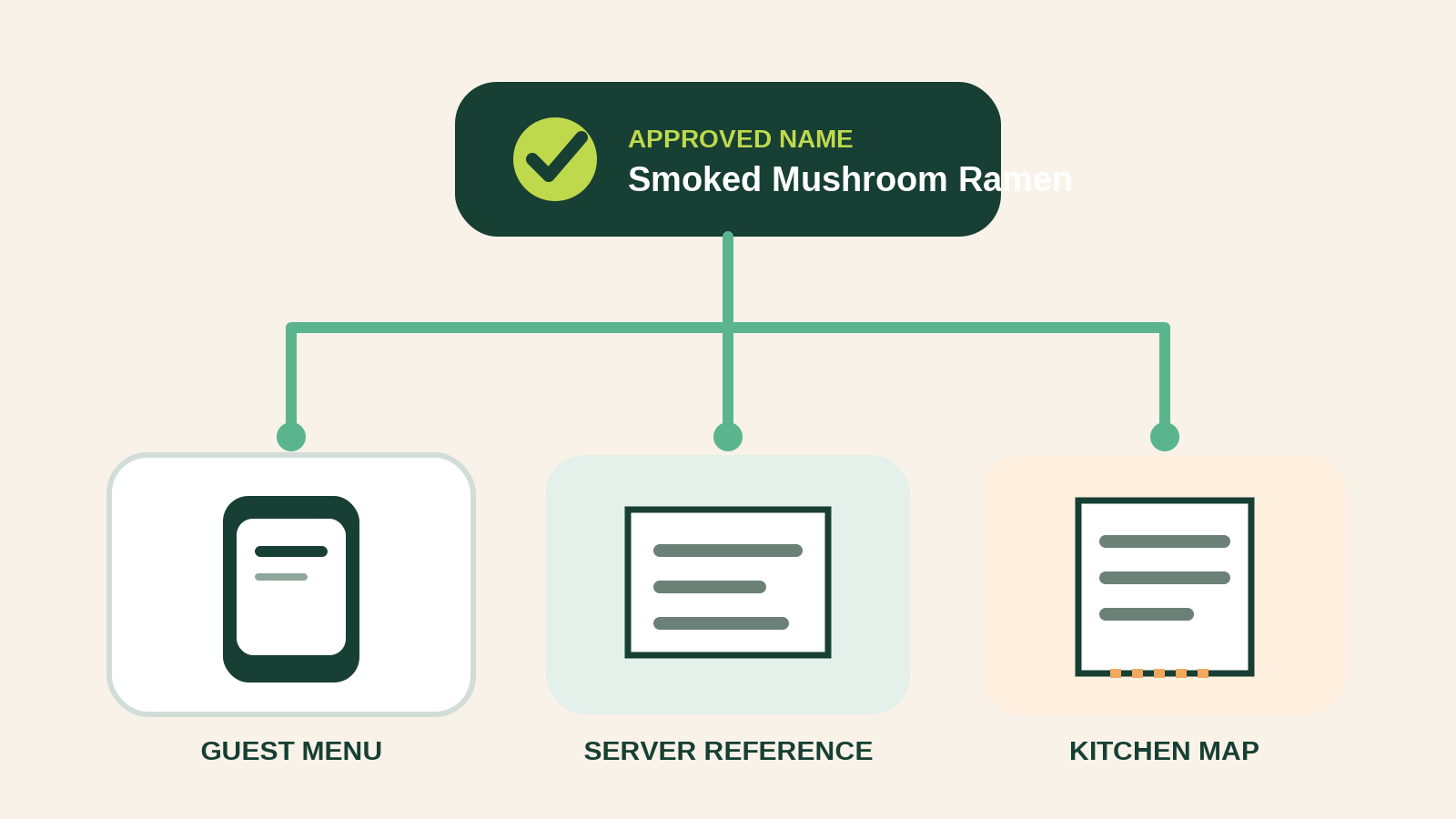
Separate names from descriptions, options and claims
Let the title answer “What is it?” and let the description answer “What is in it, how is it prepared, and what makes it distinctive?” The guide to writing mobile menu descriptions provides a practical formula for that second layer. Repeating the entire description in the name makes categories difficult to scan and creates awkward wrapping on phones.
Put sizes and variants into structured choices when the guest truly chooses among them. If small and large share the same recipe, one item with clear size options is usually easier to maintain than two nearly identical names. If lunch and dinner versions differ materially, name the distinction so staff and guests do not assume they are the same.
Treat dietary, allergen, health, origin, and sustainability language as factual claims, not naming decoration. Use a consistent tag or note system, verify the underlying information, and avoid turning a dish title into a promise the restaurant has not checked. When facts change, update the approved source and every public destination.
Run a ten-name clarity test before changing the whole menu
Select ten representative items: a bestseller, a signature dish, an unfamiliar traditional dish, a drink, a dessert, an item with options, and several ordinary entries. Show only the names to someone who did not write them. Ask what each item is, what they expect to arrive, and which two names seem to describe the same thing.
Next, place the names in the real mobile layout. Look for headings that wrap into four or five lines, distinctions hidden at the end, inconsistent capitalization, and repeated words that make the category hard to skim. A name can be grammatically correct and still fail in the space where guests use it.
Publish names through a controlled review
Start from the restaurant’s current approved menu, not from several screenshots or an old delivery listing. If you import a PDF or photo, review the extracted spelling, category, description, and price before treating the draft as authoritative. AI-assisted extraction can save retyping, but it should not silently rewrite a culturally specific name or invent a missing detail.
After editing, use the checklist for proofreading a mobile restaurant menu to check capitalization, punctuation, price alignment, links, and the public result. Open the published page through the route guests use, search for the old wording, and scan every affected category on a small phone. Tell staff what changed before service, especially when a kitchen label now maps to a new guest-facing name.
A final naming checklist
Before approval, ask seven questions. Can a first-time guest identify the type of food or drink? Is the most useful distinction visible early? Is the cultural or regional wording accurate? Does the name avoid unsupported claims? Is the spelling consistent everywhere? Does it fit the mobile layout? Can staff say it and map it to the correct item without a private explanation?
People also ask
Frequently asked questions
What makes a good restaurant menu item name?
A good name identifies the dish or drink quickly, shows the most useful distinction, and remains easy for guests and staff to say. Personality can follow, but it should not hide what the item is.
Should restaurant dishes have creative names?
Creative names work when they stay connected to a recognizable category, such as “Harbor Lights Seafood Chowder.” If the creative phrase stands alone, add a plain explanation so first-time guests do not have to guess.
How should a restaurant name an unfamiliar traditional dish?
Keep the authentic name and add a short explanation when the audience may not know the term. Verify spelling, transliteration, regional language, and the description with an approved source.
Should ingredients appear in the item name or description?
Put a defining ingredient in the name when it helps guests distinguish the item. Use the description for the fuller ingredient, preparation, accompaniment, and texture details.
Can a restaurant change item names without changing its QR code?
Yes, when the QR code points to a maintained public menu address. Update the approved menu content, republish it, and verify the same public destination on another device.